GOLDEN HILLS RC&D
  • Home
  • About Us
    • Contact Us
    • Job Openings
    • Who We Are
    • Where We Work
    • What We Do >
      • Community Partnerships
      • Arts and Culture
      • Water Resources
      • Local Foods
      • Outdoor Recreation & Tourism
      • Land Stewardship
    • News
  • Events
  • Donate to Golden Hills

News

Golden Hills' blog. To sign up for our newsletter, visit goldenhillsrcd.org/newsletters

Viewing Conservation Practices on the Byways

11/27/2023

0 Comments

 
Picture
Prairie strip
As you drive one of western Iowa's scenic byways, you may be curious about the various modifications to the land that you see from the comfort of your car. If you grew up around agriculture, they might be familiar to you, however, if you are a city dweller you may be curious about the landscapes you encounter along the byways. The rolling hills along the Glacial Trail and Western Skies scenic byways, along with the rugged terrain of the Loess Hills National Scenic Byway, present various challenges to landowners as they seek to prevent soil erosion and improve water quality.

Golden Hills RC&D is partnering with the USDA's Natural Resources Conservation Service on the 
Regional Conservation Partnership Program for the West Nishnabotna Water Quality and Infrastructure Partnership. The project will provide cost-share to landowners within the West Nishnabotna watershed to implement conservation practices that impact erosion and water quality issues.

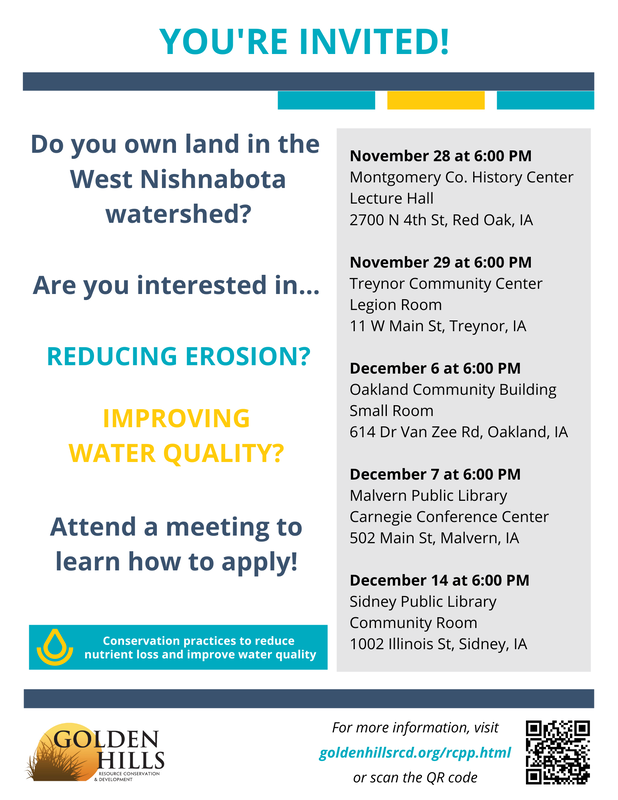
Below are short descriptions with photos of a variety of conservation practices that you can see while driving the Glacial Trail Scenic Byway, Loess Hills National Scenic Byway, or the Western Skies Scenic Byway. The RCPP program is designed to help landowners implement these conservation practices to improve water quality and prevent soil erosion. If you are a landowner within the West Nishnabotna watershed, consider attending one of several upcoming public information meetings about the program.

Terraces
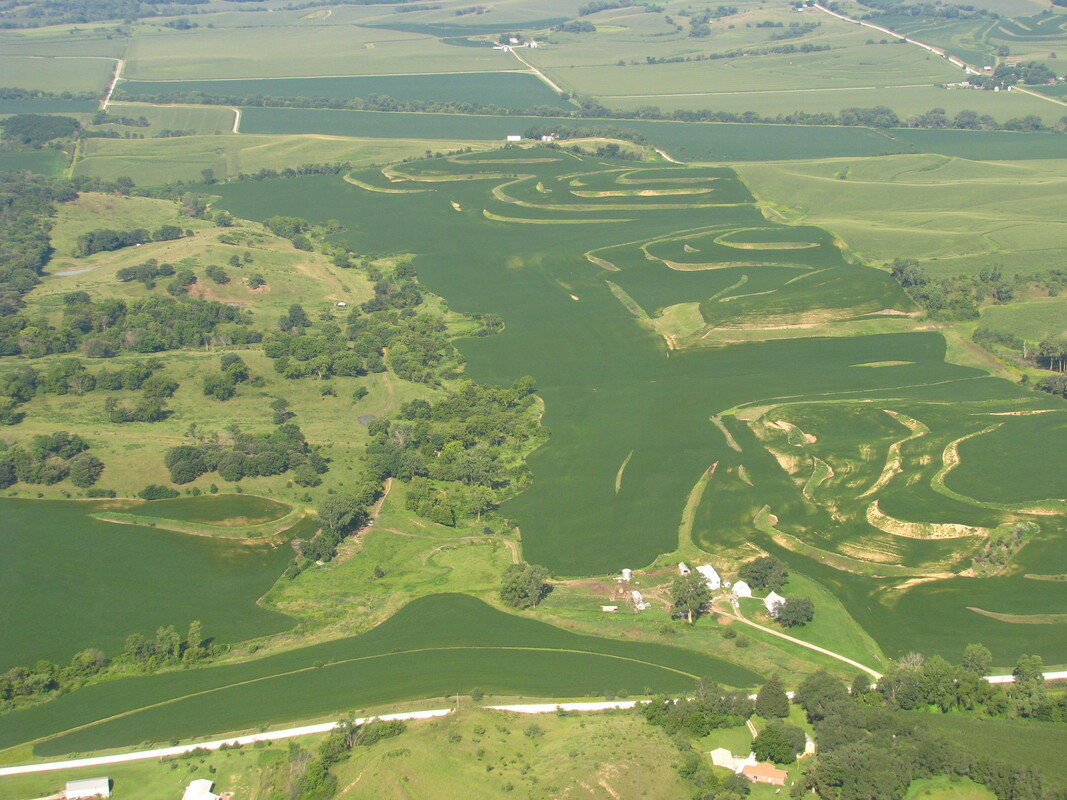
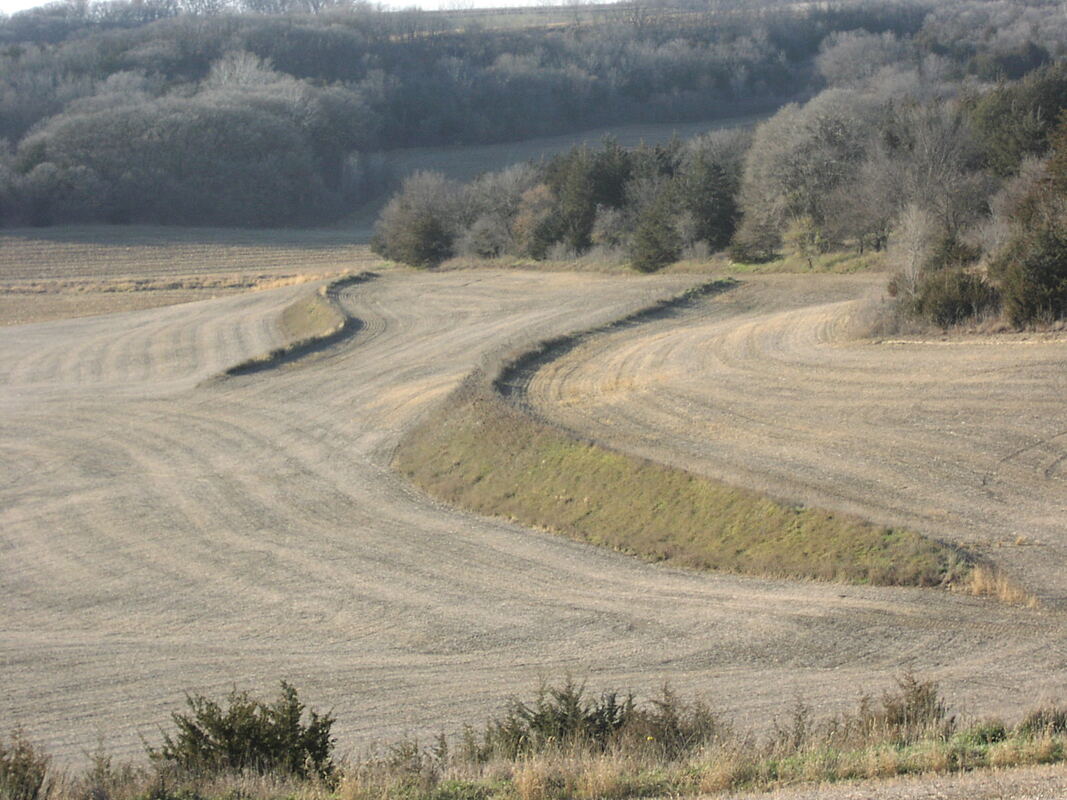
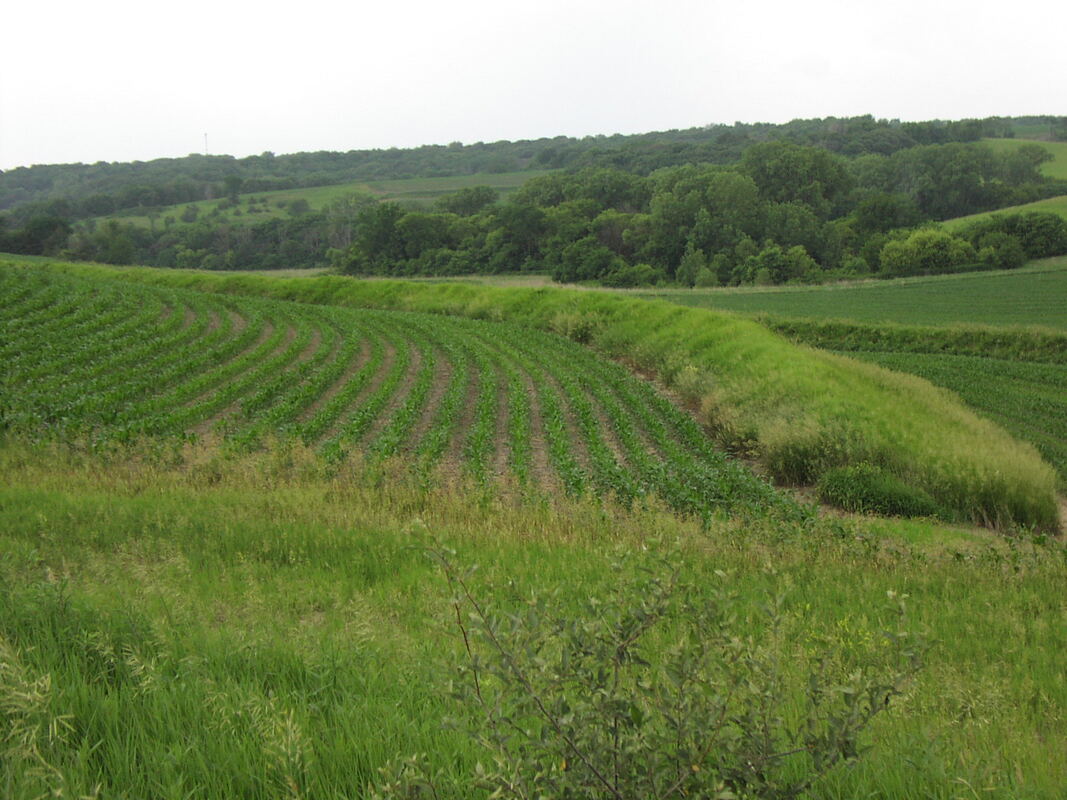
Terraces are one of the most common conservation practices you can see while driving any of the three scenic byways in western Iowa. A terrace is an earth embankment or an upslope channel across the slope of a row crop field, usually built as part of a series of terraces.

Terracing reduces soil erosion and slows down or stops runoff, thus increasing water infiltration in the soil.

Picture
A terraced field in winter
Picture
Backslope after harvest
Picture
Terrace
Picture
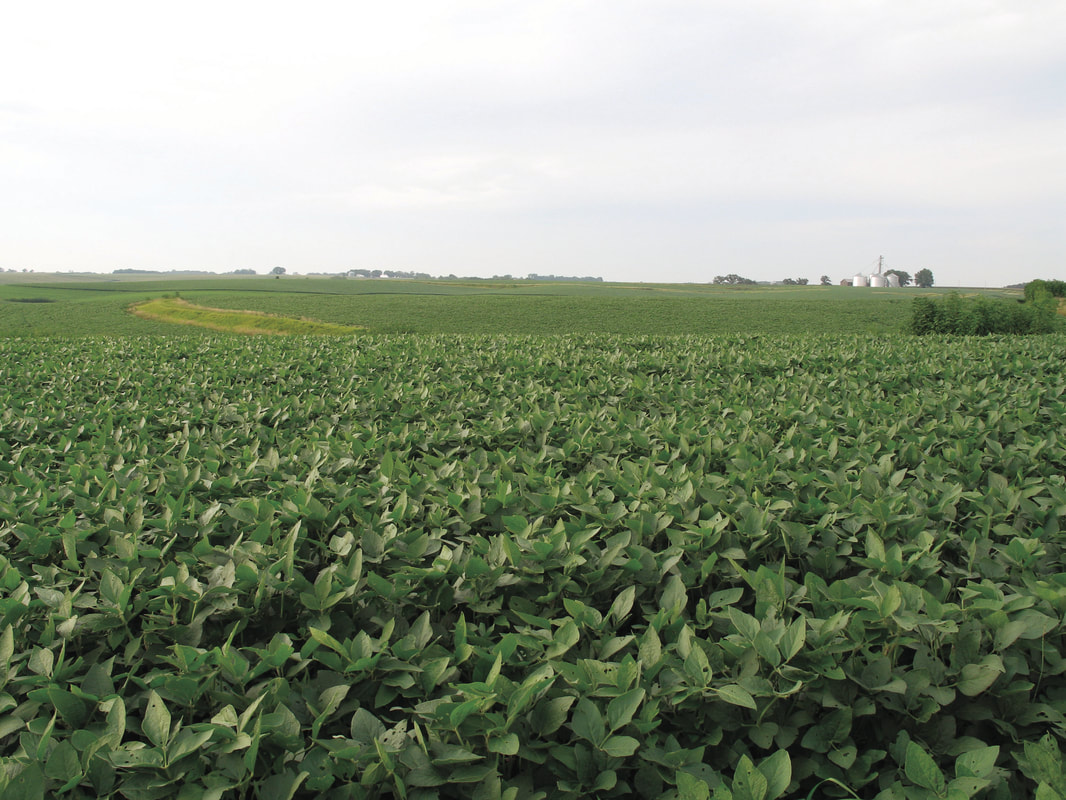
Soybean field with terracing in the distance
Picture
Terracing on the contour

Prairie Strips

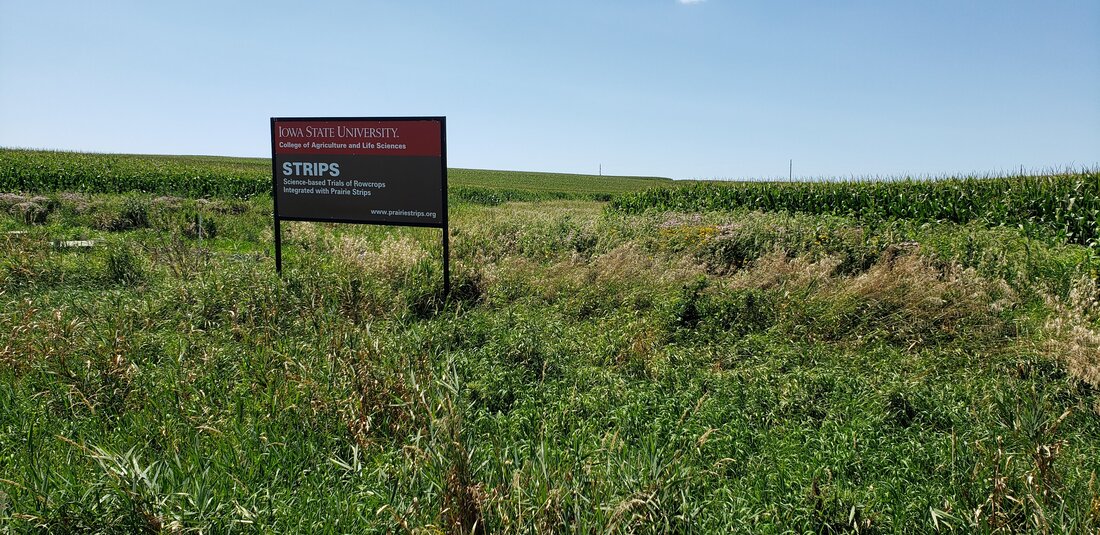
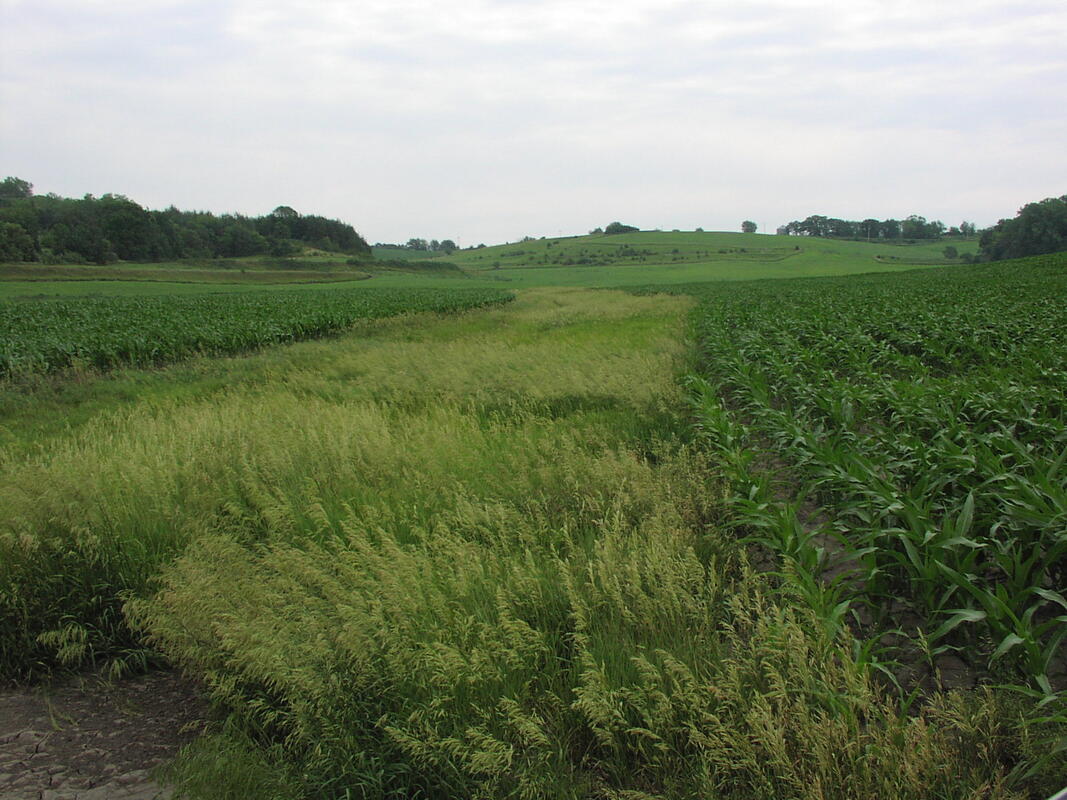
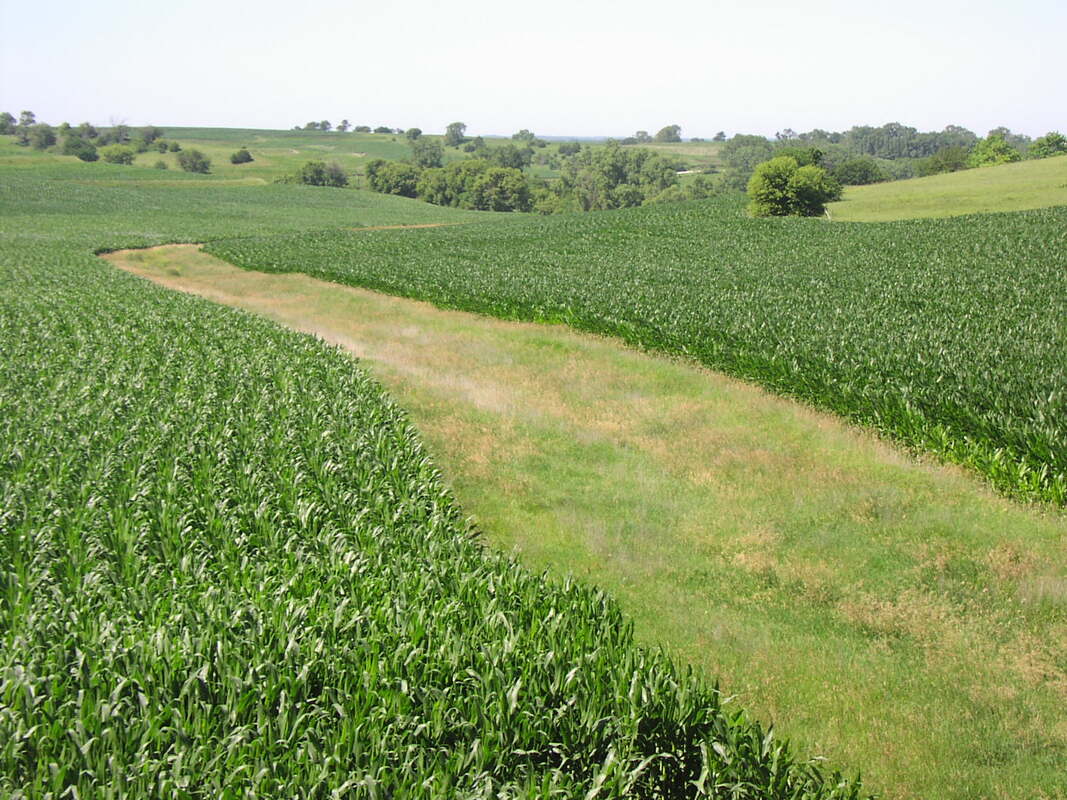
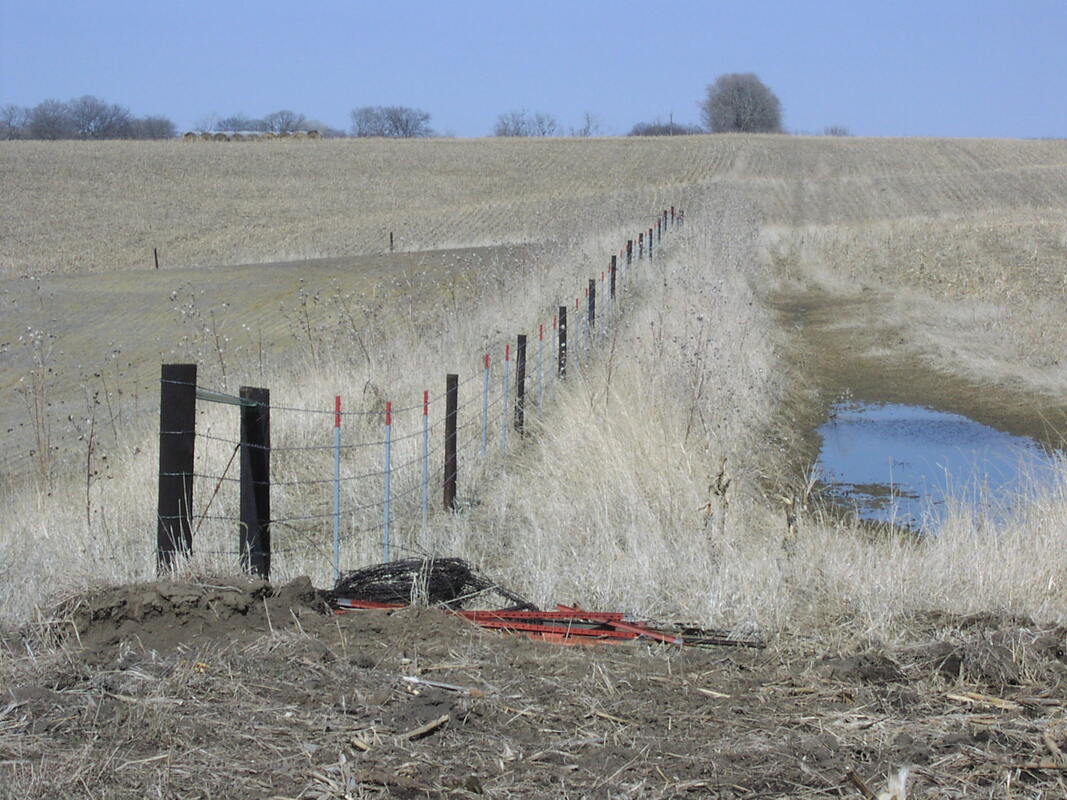
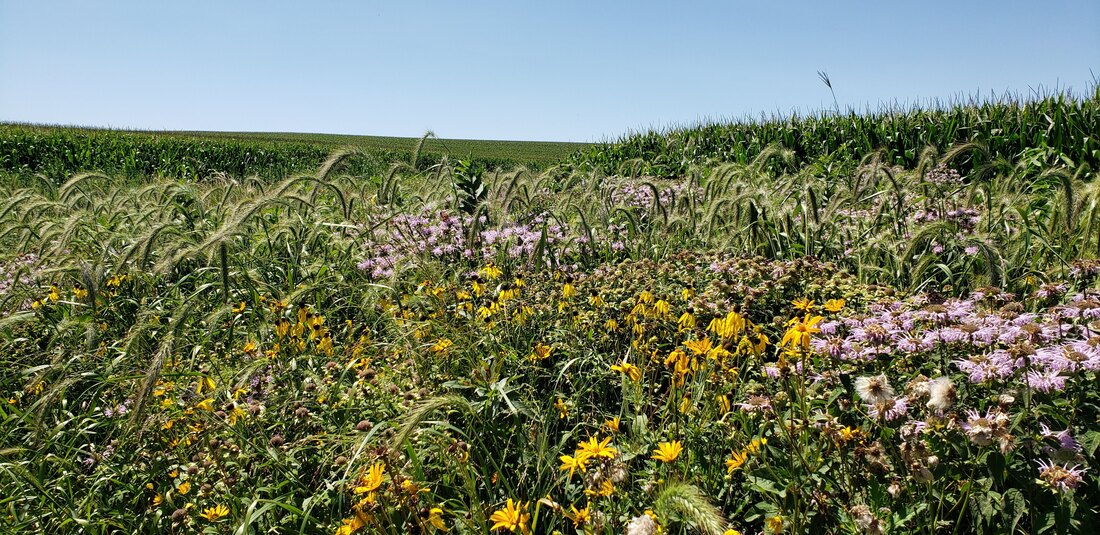
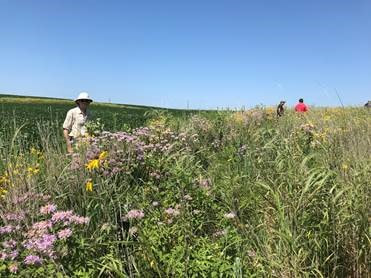
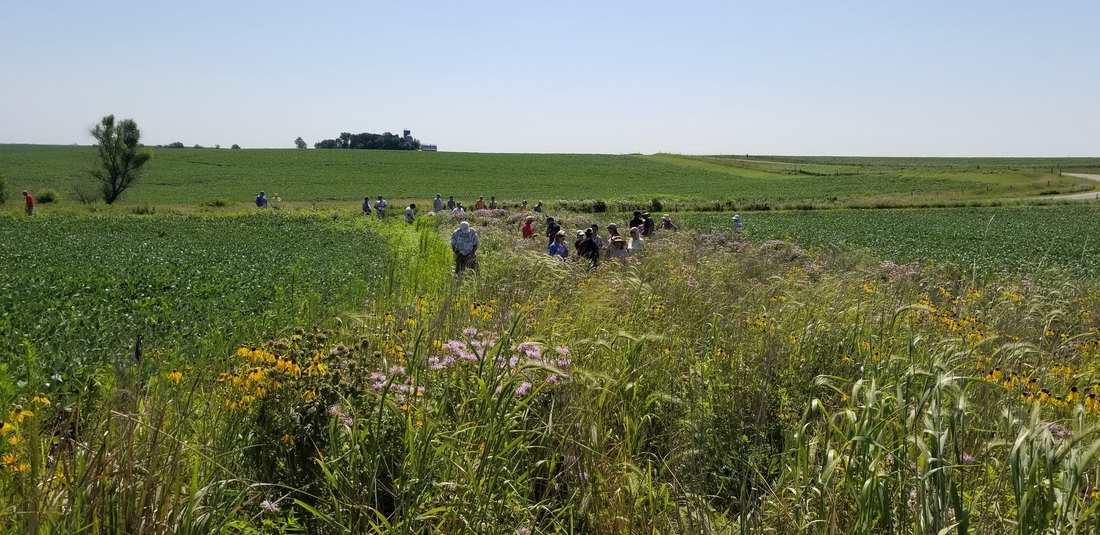
Prairie strips are a conservation practice that protects soil and water while providing habitat for wildlife. A prairie strip is a small amount of prairie strategically located in row crop fields in the form of an in-field contour buffer strip or edge-of-field filter strip. Prairie strips provide disproportionate benefits to a greater degree than other perennial vegetation types because of the diversity of native plant species incorporated, their deep and multilayered root systems, and  their stiff-stems that hold up in a driving rain.
Research shows that by converting 10% of a crop-field to diverse, native perennial vegetation, farmers and landowners can reduce sediment movement off their field by 95 percent and total phosphorous and nitrogen lost through runoff by 90 and 85 percent, respectively. Prairie strips provide a win-win scenario for farmers and wildlife.

(Source: 
What Are Prairie Strips? by Iowa State University)
Picture
Prairie strips protect soil and water while also providing valuable wildlife habitat
Picture
Prairie strip in a bean field
Picture
Picture
Contour buffer strips are similar to prairie strips but are usually of a fixed width, whereas prairie strips vary in width based on the amount of water they intercept

Grassed Waterways

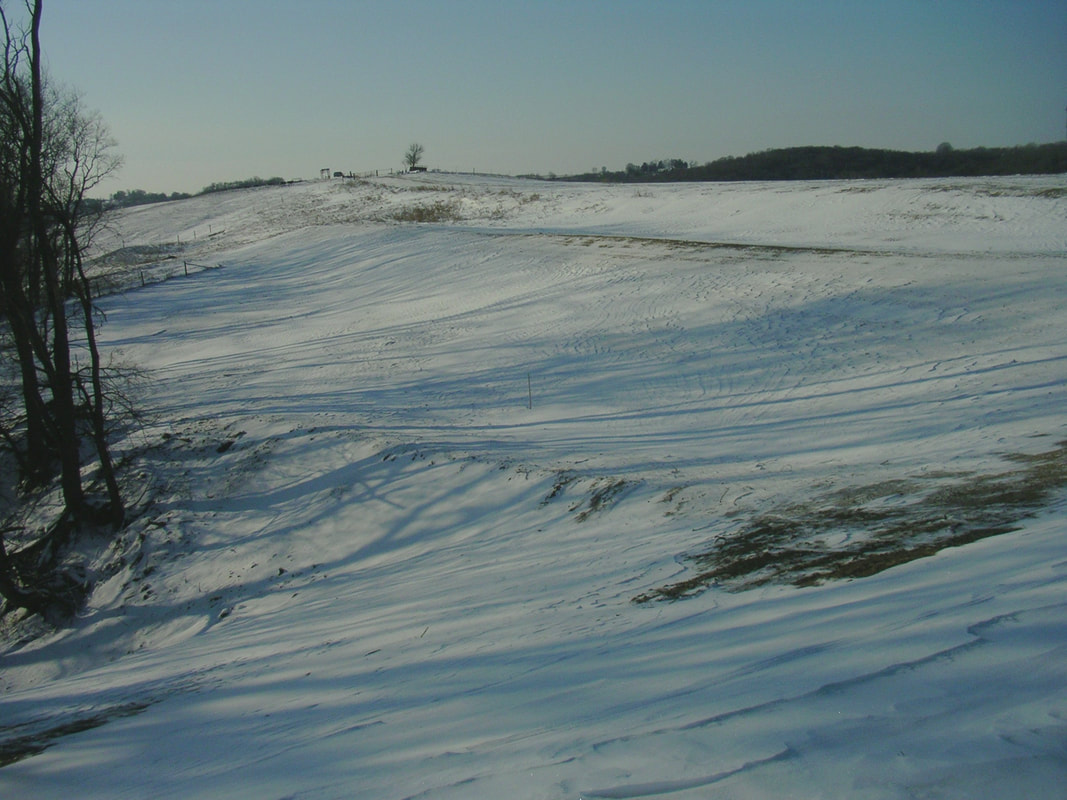
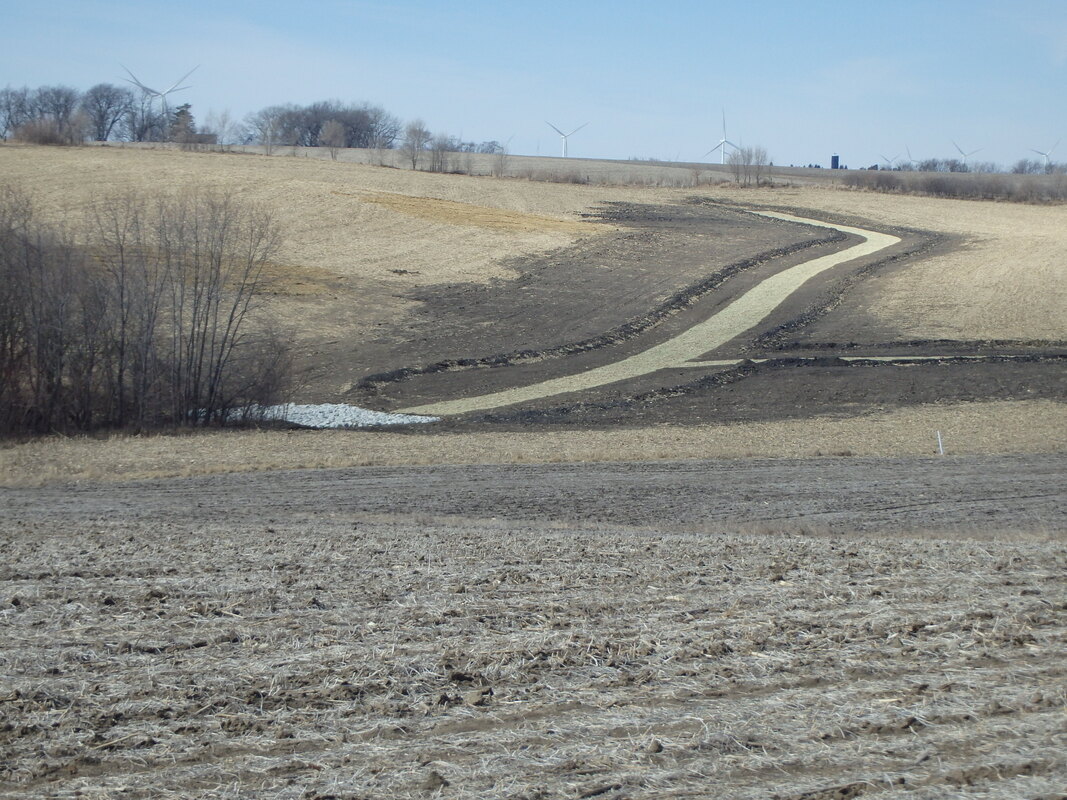
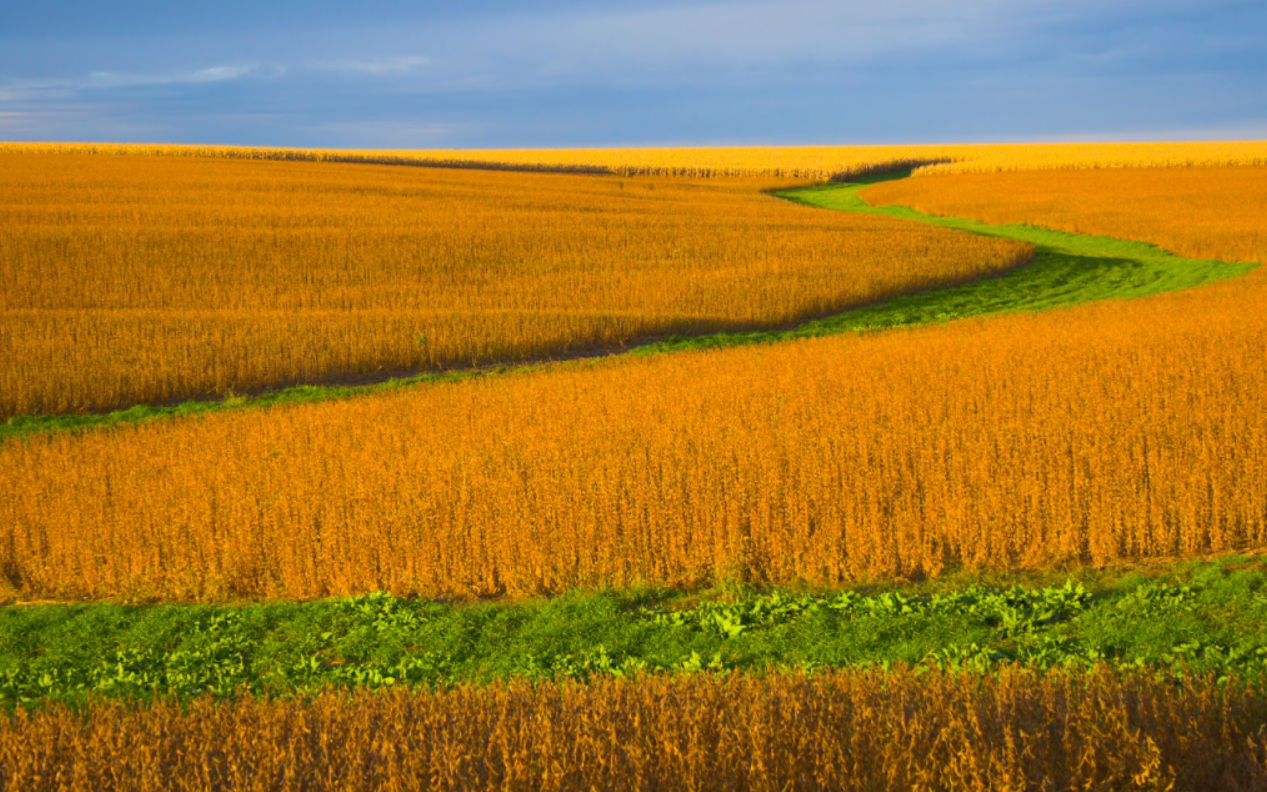
Grassed waterways are constructed graded channels that are seeded to grass or other suitable vegetation. The vegetation slows the water and the grassed waterway conveys the water to a stable outlet at a non-erosive velocity.

Grass or permanent vegetation established in waterways protects the soil from concentrated flows. Grassed waterways significantly reduce gully erosion.
The most common areas for grassed waterways are in draws between hills, and other low lying areas on slopes where water concentrates as it runs off a field. Grassed waterways may also be used to convey runoff from terraces, diversions, or other sources of water concentrations to a stable outlet.
Picture
A newly constructed grassed waterway in winter
Picture
Grassed waterway
Picture
Grassed waterway

Cover Crops

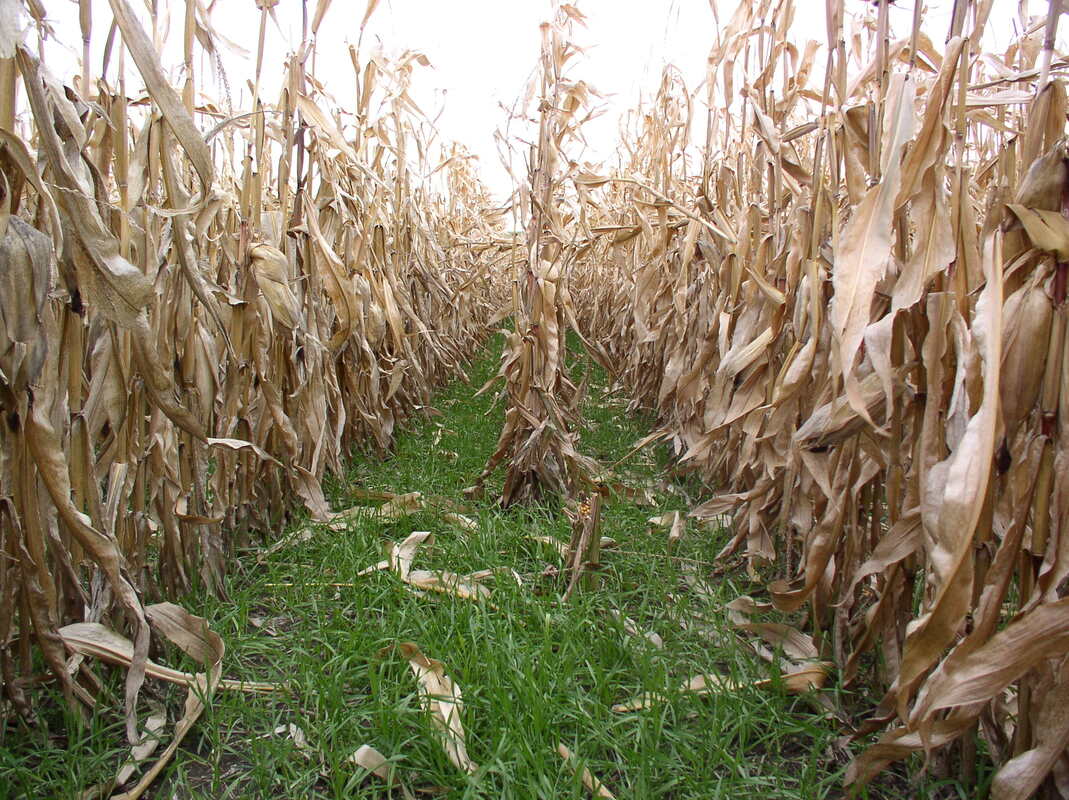
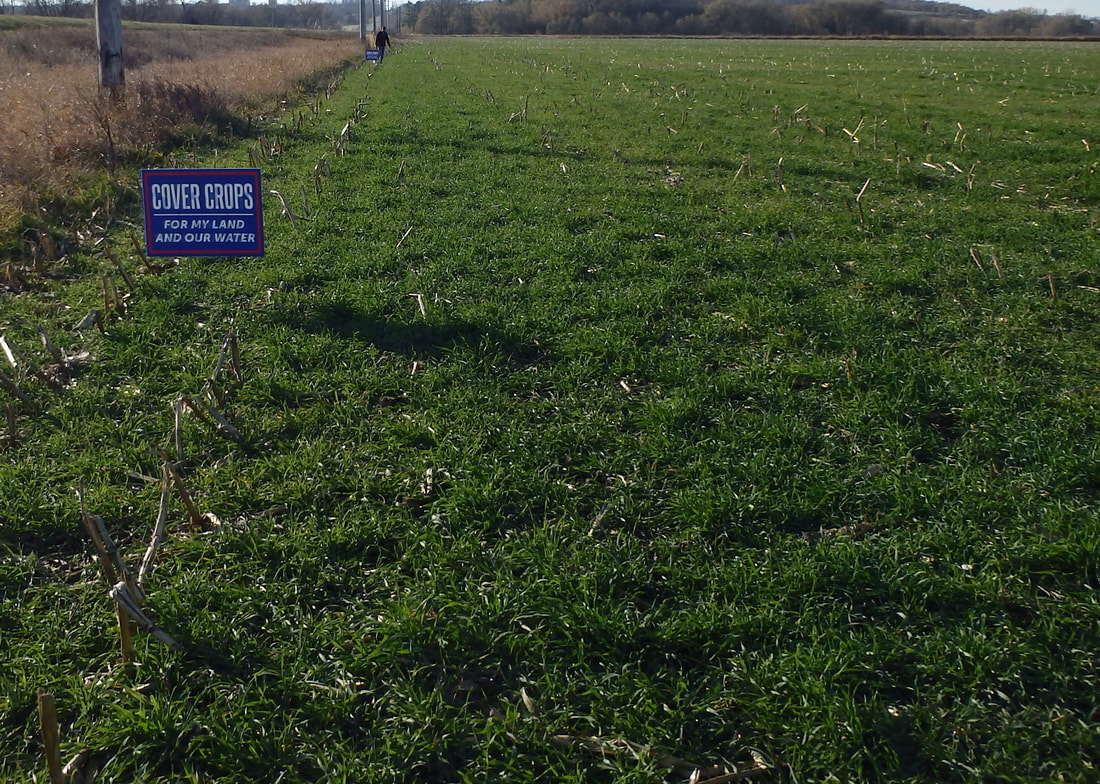
Cover crops, planted in the fall between harvest and planting of spring crops, reduce soil erosion, limit nitrogen leaching, suppress weeds,  increase soil organic matter and improve overall soil quality. Small grain cover crops increase surface cover, anchor corn and soybean residues, increase water infiltration and reduce erosion.
Common cover crops used in Iowa include winter hardy plants like rye and wheat. Other less common, but also  effective, cover crops include oats, spring wheat, hairy vetch, red clover, sweet clover, turnips, rapeseed, radishes and triticale.
Picture
Picture

Water and Sediment Control Basins

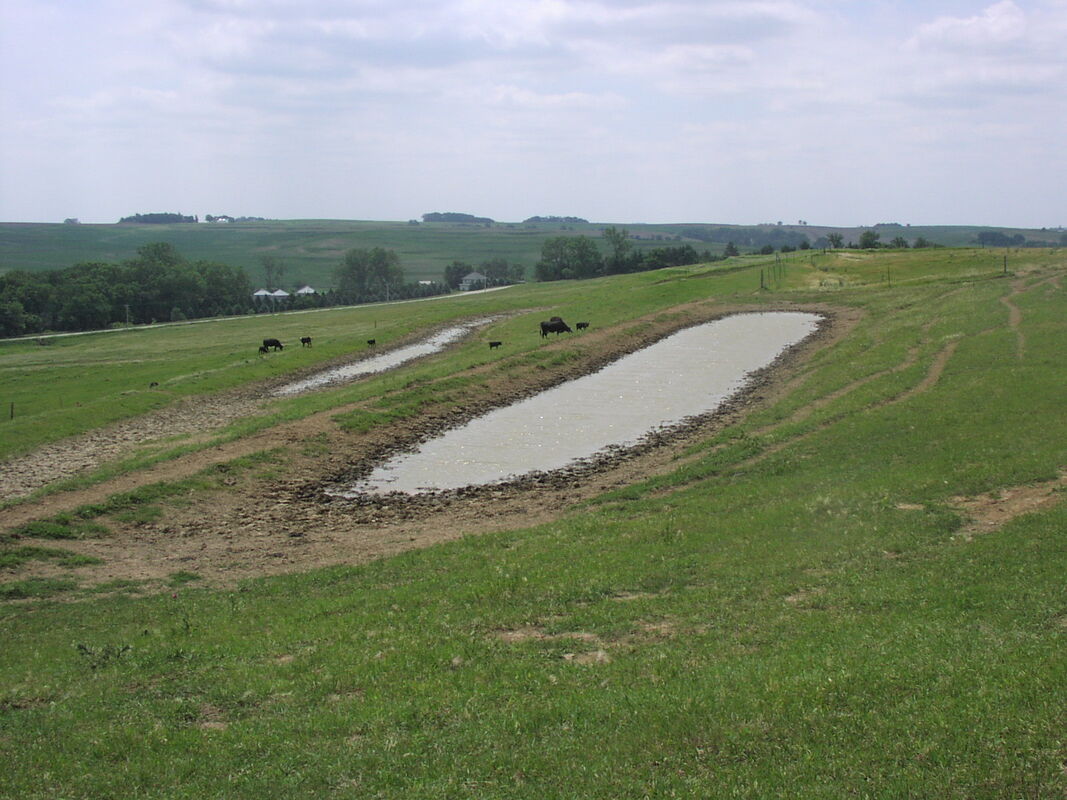
Water and sediment control basins may look like ponds, but they are earth embankments built across a slope and minor waterways to trap sediment and temporarily retain water. Runoff is released through an underground conduit. Water and sediment control basins are designed to capture runoff during storms and slowly discharge that water through a stable outlet. This eliminates erosion while also removing pollutants.
Picture
Water and Sediment Control Basin
Picture
Basin terrace

Picture

0 Comments


Leave a Reply.

    Archives

    November 2025
    October 2025
    August 2025
    July 2025
    April 2025
    January 2025
    November 2024
    October 2024
    September 2024
    July 2024
    June 2024
    May 2024
    April 2024
    March 2024
    February 2024
    January 2024
    December 2023
    November 2023
    October 2023
    September 2023
    August 2023
    July 2023
    June 2023
    May 2023
    April 2023
    March 2023
    February 2023
    January 2023
    December 2022
    November 2022
    May 2022
    April 2022
    February 2022
    January 2022
    December 2021
    November 2021
    October 2021
    August 2021
    July 2021
    June 2021
    May 2021
    April 2021
    March 2021
    February 2021
    December 2020
    November 2020
    October 2020
    September 2020
    August 2020
    July 2020
    June 2020
    May 2020
    April 2020
    January 2020
    December 2019
    September 2019
    August 2019
    July 2019
    May 2019
    April 2019
    March 2019
    January 2019
    November 2018
    October 2018
    September 2018
    August 2018
    July 2018
    May 2018
    April 2018

    Categories

    All
    Arts & Culture
    Botany On The Byways
    Community Partnerships
    Hiking The Byways
    Land Stewardship
    Local Foods
    Outdoor Recreation & Tourism
    Water Resources

    RSS Feed

Address

712 South Highway Street 
P.O. Box 189
​Oakland, IA 51560

Contact

Phone: 712-482-3029
General inquiries: [email protected]
Contact Us Page (Office hours & staff emails)
  • Home
  • About Us
    • Contact Us
    • Job Openings
    • Who We Are
    • Where We Work
    • What We Do >
      • Community Partnerships
      • Arts and Culture
      • Water Resources
      • Local Foods
      • Outdoor Recreation & Tourism
      • Land Stewardship
    • News
  • Events
  • Donate to Golden Hills